Showing posts with label Natural Disaster. Show all posts

Disaster News :Tropical Storm Bertha

MIAMI -Tropical Storm Bertha, moving briskly across open ocean waters, may strengthen into the first hurricane of the 2008 Atlantic storm season sometime during the next 48 hours, U.S. weather forecasters said on Sunday.
ertha, which formed on Thursday near the Cape Verde islands off Africa, had maximum sustained winds approaching 50 miles per hour (85 km per hour) at 11 a.m. EDT and was heading west at 21 mph (33 kph), the U.S. National Hurricane Center in Miami said.

"Gradual strengthening is expected during the next 48 hours, and Bertha could become a hurricane during that time," the forecasters said in an advisory.

Storms are judged to be hurricanes when their wind speed reaches at least 74 mph (119 kph).

Bertha is nowhere near land, and the hurricane center's tracking forecasts have the storm staying at sea and taking a general west-northwest route over the next five days. The storm's speed was expected to ease during the next two days.

"It is much too early to determine if Bertha will eventually affect any land areas," the forecasters said.

The storm's center was near latitude 17.4 north and longitude 45.1 west, or about 1,185 miles east of the northern Leeward Islands.

Bertha is the second tropical storm of what has been predicted to be an above-average storm season in the Atlantic and Caribbean.

Energy markets closely monitor tropical storms in the Atlantic because of the potential for them to threaten oil installations in the Gulf of Mexico. The 2004 and 2005 hurricane seasons, which included Katrina, the hurricane that swamped New Orleans, left dozens of oil rigs toppled or damaged and sent crude prices to what were then record highs.

The Atlantic-Caribbean hurricane season runs from June 1 to the end of November, with August and September usually the busiest months.


China grappled with backed-up rivers and reservoirs in danger of collapse, along with looming storms that threatened Monday to compound damage from the country's worst earthquake in three decades.Two weeks after the magnitude 7.9 earthquake centered in Sichuan province, the confirmed death toll rose to 65,080 with 23,150 people still missing, the Cabinet said. The government has said the final number of dead is expected to exceed 80,000.
Many of the disaster victims were children, prompting officials to clarify the country's strict one-child policy guidelines.The Chengdu Population and Family Planning Committee in the capital of Sichuan province said Monday that families whose children was killed, severely injured or disabled in the quake can get a certificate to have another child.Chen Xueyun's 8-year-old son, Weixi, was killed when the family's apartment in Qingchuan collapsed. Chen said he searched three days before finding the boy's body. He wears his son's blue plastic watch as a reminder.Monday's announcement could offer some parents some hope, Chen said, after their grief subsides."If they are still sad and depressed, it's impossible to talk about another baby," he said. "But in the future, it could be quite helpful for them."On Monday, 1,800 soldiers arrived on foot at the new Tangjiashan lake in Beichuan county to fight the flood risk, each carrying 22 pounds of explosives to blast through the debris, the official Xinhua News Agency said.The lake is 2 miles upstream from the center of Beichuan county. Thousands of people who remained there after the initial earthquake have been evacuated in recent days as a precaution.With weather clearing that had prevented helicopter flights, heavy equipment was also lifted in the area to help remove debris, state media reported.But thunderstorms were forecast for parts of Sichuan later Monday and Tuesday, the China Meteorological Administration said, adding they "could increase the risks posed by river blockages in some quake-hit areas."
The rains were likely to put more pressure on dams and reservoirs weakened by the quake. The storms herald the start of the summer rainy season that accounts for more than 70 percent of the 2 feet of rain that falls on the area each year.The backed-up lake is one of several dozen in Sichuan.In An country, about 30 miles to the south of Beichuan, a landslide blocked the Chaping river, submerging Shuangdian village.Residents say the lake has been rising by about 7½ feet a day."The water was covering the road, and two days later I could not see the roof of my house anymore," said Liu Zhongfu, 31, a truck driver who built his two-story wooden house himself, standing on a mountain overlooking the new lake. A sofa and bits of wood that were once part of houses could be seen floating among the debris in the milky green water.Liu was working away from home when the earthquake hit. His wife, 3-month-old daughter and 60-year-old mother all were unhurt."I thought I could go back but I have nothing now.
My village, it's all become a sea," he said.Water there was backed up 2 miles along the river, said Wang Li, county Communist Party secretary."We need to take care of this soon, this is a serious situation," he said.Elsewhere, 600 people were voluntarily evacuated from Guanzhuang in Qingchuan county because of landslide worries."There's no danger for this exact moment from flooding but we are very worried because the whole mountain is loose," said Ma Jian, a local official.Problems with dams and reservoirs from the earthquake and its aftershocks also have been reported in other provinces.The Water Resources Ministry said Monday that three small reservoirs in Shaanxi province, just north of Sichuan, were in danger of collapse after the strong aftershock Sunday. A total 2,383 reservoirs were in danger across the country, the ministry said.China's top Communist Party leaders said relief efforts should now focus more on resettlement and post-quake reconstruction, but that work to find survivors should not stop.The shift was announced at a meeting of the Political Bureau of the Communist Party of China's Central Committee presided over by President Hu Jintao, Xinhua reported.
Meanwhile, the Education Ministry said it would investigate whether flawed school construction contributed to collapses."We will punish those who cut corners during school building construction and will have zero tolerance for corruption and shoddy school projects," spokesman Wang Xuming said in Beijing.In Mianzhu city, the Communist Party secretary pleaded with protesting parents — whose children were killed in a school collapse — not to complain to higher authorities, the Southern Metropolis Daily newspaper reported Monday.Despite Jiang Guohua's pleas, the parents of the 127 children who died kept marching Sunday and eventually met with higher officials, who told them the government would investigate.The march was the latest example of growing anger among Chinese about the quake, especially the fact that nearly 7,000 schoolrooms were destroyed while school was in session. Parents at several schools have held protests, defying the government's general disapproval of such demonstrations.A photograph on the newspaper's Web site shows Jiang on his knees, his arms outstretched in vain."Please trust that the Mianzhu party committee can solve this problem," he begged the parents. "Don't go!"But the parents marched on, carrying photos of their children."We have no more tears," one mother told the newspaper.Also Monday, Xinhua reported that one of the two pandas still missing after the earthquake had been found.The panda was recovered earlier in the day, but there were no immediate details given on its condition.The pandas had been missing from the famed Wolong panda reserve, located near the epicenter in central Sichuan province. The center suffered heavy damage from the quake and five staff members were killed.


AN XIAN, China (May 20) - China is grappling with the next massive task in the aftermath of its earthquake — how to shelter the 5 million people left homeless. Many were living Tuesday in tent cities like one at the base of Qianfo mountain in the disaster zone, offering some stability — along with food and medical care — to those whose lives were upended."After the quake, we couldn't sleep for five days. We were really, really afraid," said Chen Shigui, a weathered 55-year-old farmer who climbed for two days with his wife and injured father to reach the camp from their mountain village. "I felt relieved when we got here. It's much safer compared to my home."

But there's not enough room to go around.The government issued an urgent appeal Tuesday for tents and brought in the first foreign teams of doctors and field hospitals, some of whom were swapping out with overseas search and rescue specialists.The switch underscored a shift in the response to China's worst disaster in three decades from an emergency stage to one of recovery — and for many, enduring hardship.On the second of a three-day national mourning period, the authoritarian government appeared to be moving to rein in the unusually free reporting it allowed in the disaster's first week.

Most major newspapers carried near-identical photographs on their front pages of President Hu Jintao and other senior leaders with their heads bowed — a uniformity that is typical when state media censors direct coverage.The May 12 earthquake's confirmed death toll rose to more than 40,000, with at least 10,000 more deaths expected, and officials said more than 32,000 people were missing. The State Council, China's Cabinet, said 80 percent of the bodies found in Sichuan province had been either cremated or buried.Authorities rushed to dispose of corpses, burning them or laying them side by side in pits. Vice Minister for Civil Affairs Jiang Li said officials had begun collecting DNA samples from bodies so their identities could be confirmed later.Rescues — becoming more remarkable by the hour — continued on the eighth day since the quake, but the trickle of earlier days had slowed to a drip.


YANGON - Torrential tropical downpours lashed Myanmar's Irrawaddy delta on Friday, deepening the misery of an estimated 2.5 million destitute survivors of Cyclone Nargis and further hampering the military government's aid efforts.

In the storm-struck town of Kunyangon, around 100 km (60 miles) southwest of Yangon, thousands of men, women and children stood in mud and rain, their hands clasped together in supplication at the occasional passing aid vehicle.

Children mobbed any car that stopped, grimy hands reaching through a window in search of bits of bread or a t-shirt.

Despite such scenes and the latest storm, likely to turn already damaged roads to mud, the former Burma's ruling generals insist their relief operations are running smoothly.

However, they issued an edict in state-run newspapers on Friday saying legal action would be taken against anybody found hoarding or selling relief supplies, amid rumors of local military units expropriating trucks of food, blankets and water.

If emergency supplies do not get through in much greater quantities, foreign governments and aid groups say starvation and disease are very real threats.

Some cholera has been confirmed among survivors, but the number was in line with case levels in previous years, the World Health Organization (WHO) said.

"We don't have an explosion of cholera," Maureen Birmingham, acting WHO representative in Thailand, told reporters in Bangkok.

Diarrhea, dysentery and skin infections have afflicted some cyclone refugees crammed into monasteries, schools and other temporary shelters after the devastating May 2 storm.

The WHO, which has sent health kits, bleach and chlorine tablets to treat dirty water, said the peak threat from disease was 10 days to one month after a natural disaster.

EU URGES OPENING UP TO AID

The European Union's top aid official, Louis Michel, met ministers in Yangon on Thursday and urged them to admit foreign aid workers and essential equipment to keep the death toll, which the Red Cross says could be as high as 128,000, from rising.

Myanmar state television raised its official death toll on Thursday to 43,328. Independent experts say the figures are probably far higher, with British officials saying the number of dead and missing may be 200,000.

Michel, like so many other envoys before, had made little headway so far.

"Relations between Myanmar and the international community are difficult," he told Reuters. "But that is not my problem. The time is not for political discussion. It's time to deliver aid to save lives."

Earlier, the reclusive generals, the latest face of 46 years of unbroken military rule, signaled they would not budge on their position of limiting foreign access to the delta, fearful to do so might loosen their vice-like grip on power.

"We have already finished our first phase of emergency relief. We are going onto the second phase, the rebuilding stage," state television quoted Prime Minister Thein Sein as telling his Thai counterpart this week.

Underlining where its main attentions lie, the junta announced an overwhelming vote in favor of an army-backed constitution in a referendum held on May 10 despite calls for a delay in the light of the disaster.

DRIBS AND DRABS

Two weeks after the storm tore through the heavily populated Irrawaddy delta rice bowl, food, medicine and temporary shelter have been sent in dribs and drabs to devastated communities.

In Kunyangon, the junta has started distributing small amounts of emergency food.

But around the town, the countryside remains a mess of half-submerged trees, snapped electricity pylons or bamboo poles -- the skeletal remains of a house -- leaning at crazy angles.

Villagers say they are slowly burying the bloated corpses of friends and relatives that have littered the rice fields for the last two weeks. But the stench of death remains.

The United Nations says more than half a million people may now be in temporary settlements.

Frustrated by the speed of the official response, ordinary people were taking matters into their own hands, sending trucks and vans into the delta with clothes, biscuits, dried noodles, and rice provided by private companies and individuals.

"There are too many people. We just cannot give enough. How can the government act as if nothing happened?" said one volunteer, who declined to be named for fear of reprisals.

With almost total distrust of the government, private aid is being left in the care of Buddhist monasteries, to be distributed by the monkhood, who have immense moral authority.

Going through the roll-call of the needy is a grim task.

"We need to give aid to this family," said one monk pointing to a list in a temple in one village.

"No," another monk interjected. "They're all dead."


DUJIANGYAN, China - Tang Xiaomin had just left her fourth-floor apartment to buy groceries when the building started to crumble around her.
An upstairs neighbor was thrown against the kitchen table. She grabbed her purse and rushed out. Another resident, pregnant and resting, didn't have time. She became trapped.
The three occupants of the six-story apartment building at 315 Happiness Road were just some of the residents who managed to survive Monday's massive earthquake, although many of their neighbors did not. They endured moments of terror, shock, relief and now worry as they try to rebuild their lives.

"It's hard to take because we never, ever experienced anything like this before," said the short, slender Tang, wearing jeans and a sweatshirt and standing in front of a shelter of plastic sheets, umbrellas and bamboo poles she now calls home.
'Property loss is just huge'Tang, 40 and unemployed, had moved into the newly built apartment 10 years ago, using compensation awarded when the government demolished her former home as part of China's urban renewal boom. The apartment was home to her and her husband, a construction worker, their 16-year-old son, who was at school when the quake struck, and Tang's 61-year-old mother.
The mother was alone in the apartment when the temblor hit. Hours later, rescuers eased her through a gap in the apartment's facade and down to the street below.
The family of four spent Monday night camped under an umbrella in a chilly drizzle, numb from both the cold and their ordeal — but relieved to be alive and together.
"The property loss is just huge, but the people are safe and that's all that matters," Tang said in her sing-songy Sichuan accent.
Covered in dustNeighbor Luo Ying was one flight upstairs from Tang, in a fifth-floor apartment, when the building began shaking at 2:27 p.m.

The department store clerk remembers chunks of tile and cement crashing all around her as she scrambled down five flights of stairs with her neighbors.
"I was covered in dust when I got to the bottom. I didn't dare believe it," she said.
Seeking shelter from the rain, Luo and her neighbors scavenged a canopy from an electronics store promotional event and piled old signboards high with salvaged blankets.
By dusk, about five hours after the quake, police and military units arrived, bringing relief, Luo said, "We knew we weren't alone and that someone would help."
Her husband has taken her daughter to the provincial capital of Chengdu while she remains near the apartment building, watching the rescue teams that clear away rubble and look for bodies with backhoes, cranes and hand tools.


YANGON, Myanmar - Another powerful storm is headed toward Myanmar's cyclone-devastated delta and the U.N. is warning of a second wave of deaths.

Thailand's prime minister says, however, that Myanmar officials told him they are in control of the cyclone relief operations and doesn't need foreign experts.

Prime Minister Samak Sundaravej says the Myanmar junta guaranteed that there are no disease outbreaks and no starvation among the estimated 2 million survivors.

Samak says Myanmar does not want any foreign aid workers because they "have their own team to cope with the situation."

Samak was talking to reporters Wednesday after returning from Myanmar's main city of Yangon, where he met with his counterpart, Prime Minister Lt. Gen. Thein Sein.


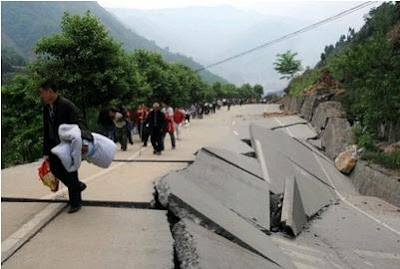
DUJIANGYAN, China - The toll of the dead and missing soared as rescue workers dug through flattened schools and homes on Tuesday in a desperate attempt to find survivors of China's worst earthquake in three decades.

The official Xinhua News Agency said the death toll exceeded 12,000 in Sichuan province alone, and 18,645 were still buried in debris in the city of Mianyang, near the epicenter of Monday's massive, 7.9-magnitude quake.

The Sichuan Daily newspaper reported on its Web site that more than 26,000 people were injured in Mianyang.

The numbers of casualties was expected to rise due to the remoteness of the areas affected by the quake and difficulty in finding buried victims.

There was little prospect that many survivors would be found under the rubble. Only 58 people were extricated from demolished buildings across the quake area so far, China Seismological Bureau spokesman Zhang Hongwei told Xinhua. In one county, 80 percent of the buildings were destroyed.

Rain was impeding efforts and a group of paratroopers called off a rescue mission to the epicenter due to heavy storms, Xinhua reported.

More than two dozen British and American tourists who were thought to be panda-watching in the area also remained missing.

Officials urged the public not to abandon hope.

"Survivors can hold on for some time. Now it's not time to give up," Wang Zhenyao, disaster relief division director at the Ministry of Civil Affairs, told reporters in Beijing.

Premier Wen Jiabao, who rushed to the area to oversee rescue efforts, said a push was on to clear roads and restore electricity as soon as possible. His visit to the disaster scene was prominently featured on state TV, a gesture meant to reassure people that the ruling party was doing all it could.

"We will save the people," Wen said through a bullhorn to survivors as he toured the disaster scene, in footage shown on CCTV. "As long as the people are there, factories can be built into even better ones, and so can the towns and counties."

State media said rescue workers had reached the epicenter in Wenchuan county — where the number of casualties was still unknown. The quake was centered just north of the Sichuan provincial capital of Chengdu in central China, tearing into urban areas and mountain villages.

Earthquake rescue experts in orange jumpsuits extricated bloody survivors on stretchers from demolished buildings.

Some 20,000 soldiers and police arrived in the disaster area with 30,000 more on the way by plane, train, trucks and even on foot, the Defense Ministry told Xinhua.

Aftershocks rattled the region for a second day, sending people running into the streets in Chengdu. The U.S. Geological Survey measured the shocks between magnitude 4 and 6, some of the strongest since Monday's quake.

Zhou Chun, a 70-year-old retired mechanic, was leaving Dujiangyan with a soiled light blue blanket draped over his shoulders.

"My wife died in the quake. My house was destroyed," he said. "I am going to Chengdu, but I don't know where I'll live."

Zhou and other survivors were pulling luggage and clutching plastic bags of food amid a steady drizzle and the constant wall of ambulances.

Just east of the epicenter, 1,000 students and teachers were killed or missing at a collapsed high school in Beichuan county — a six-story building reduced to a pile of rubble about two yards high, according to Xinhua. Xinhua said 80 percent of the buildings had collapsed in Beichuan alone.

At another leveled school in Dujiangyan, 900 students were feared dead. As bodies of teenagers were carried out on doors used as makeshift stretchers, relatives lit incense and candles and also set off fireworks to ward away evil spirits.

Elsewhere in Gansu province, a 40-car freight train derailed in the quake that included 13 gasoline tankers was still burning Tuesday, Xinhua said.

Gasoline lines grew in Chengdu and grocery stores shelves were almost empty. The Ministry of Health issued an appeal for blood donations to help the quake victims.

Fifteen missing British tourists were believed to have been in the area at the time of the quake and were "out of reach," Xinhua reported.

They were likely visiting the Wolong Nature Reserve, home to more than 100 giant pandas, whose fate also was not known, Xinhua said, adding that 60 pandas at another breeding center in Chengdu were safe.

Another group of 12 Americans also on panda-watching tour sponsored by the U.S. office of the World Wildlife Fund remained out of contact Tuesday, said Tan Rui, WWF communications officer in China.

Two Chinese-Americans and a Thai tourist also were missing in Sichuan province, the agency said, citing tourism officials.

Expressions of sympathy and offers of help poured in from the United States, Japan and the European Union, among others.

The Dalai Lama, who has been vilified by Chinese authorities who blame him for recent unrest in Tibet, offered prayers for the victims. The epicenter is just south of some Tibetan mountain areas that saw anti-government protests earlier this year.

Beijing Games organizers said the Olympic torch relay will continue as planned through the quake-affected area next month.

The Chinese government said it would welcome outside aid, and Russia was sending a plane with rescuers and supplies, the country's Interfax news agency reported.

But Wang, the disaster relief official, said international aid workers would not be allowed to travel to the affected area.

"We welcome funds and supplies; we can't accommodate personnel at this point," he said.

China's Ministry of Finance said it had allocated $123 million in aid for quake-hit areas.

The quake was China's deadliest since 1976, when 240,000 people were killed in the city of Tangshan, near Beijing in 1976. Financial analysts said the quake would have only a limited impact on the country's booming economy.


YANGON, Myanmar (May 12) -- The United States delivered its first relief supplies to Myanmar on Monday, as the U.N. urged the reclusive nation to open its doors to foreign experts who can help up to 2 million cyclone victims facing disease and starvation.
The military C-130 cargo plane, packed with 28,000 pounds of supplies, flew out of the Thai air force base of Utapao and landed in Yangon, capping prolonged negotiations to persuade Myanmar's military government to accept U.S. help.

Several Myanmar Cabinet ministers, military officers and the top U.S. diplomat in Myanmar, Shari Villarosa, greeted the plane.

Government spokesman Ye Htut said the aid, which was transferred to Myanmar army trucks, would be ferried by air force helicopters to the worst-hit Irrawaddy delta later Monday. Two more U.S. air shipments were scheduled to land Tuesday.
The official death toll from the May 3 Cyclone Nargis is 28,458 with another 33,416 still missing. But the U.N. Assistant Secretary-General Catherine Bragg and others have said the death toll could reach 100,000 or higher.

Though international assistance has started trickling in, the authoritarian government has barred most foreign experts who are experienced in managing humanitarian crises.
Richard Horsey, a spokesman for U.N. humanitarian operations, in Bangkok, Thailand, said clean drinking water, shelter, medical support and food were sorely lacking.

"The authorities of the country need to open up to an international relief effort. There aren't enough boats, trucks, helicopters in the country to run the relief effort of the scale we need," he said. "It's urgent that the authorities do open themselves up."

The junta has made a huge concession in letting the U.S. — the fiercest critic of its human rights record — bring in relief.

The U.S. plane carried mosquito nets, blankets and water in an operation dubbed "Joint Task Force Caring Response."

Also on the plane was Adm. Timothy J. Keating, the commander of the U.S. military in the Pacific, who will try to personally negotiate with the junta for a larger U.S. role in providing relief.

U.S. Marine spokesman Lt. Col. Douglas Powell said there are 11,000 service members and four ships in the region for an annual military exercise, Cobra Gold, that could be harnessed to help the mercy mission.

Three U.S. Navy ships in the Bay of Bengal were sailing closer to Myanmar on Monday, ready to aid cyclone victims if they are given permission, Vice Adm. Doug Crowder told reporters in Jakarta, Indonesia.

In Irrawaddy delta, people were surviving in miserable conditions — hundreds cramped in monasteries with little access to food. Others camped in the open, drinking dirty water contaminated by human feces or dead bodies and animal carcasses.

"The lives of thousands of cyclone survivors are at extreme risk," aid group World Vision said. "Displaced people are living in appalling conditions in makeshift shelters and camps where overcrowding and unsanitary conditions are prevalent."

Children — many of them orphans — are suffering from fever, diarrhea and respiratory infections, it said.

Heavy rains were forecast this week, which would further hinder aid delivery, even though it could be the only source of drinking water.

Thai Prime Minister Samak Sundaravej sent a letter to his Myanmar counterpart Monday, urging the junta to issue more visas. But the junta replied that visas for foreigners would be considered on a case-by-case basis, Thai government spokesman Wichianchote Sukchotrate said.

Samak's letter was carried by his personal envoy, Lt. Gen. Niphat Thonglek, who traveled to Myanmar on the U.S. plane, Wichianchote said. He said Myanmar informed Niphat that it will open the Thilawa port in Yangon to receive international relief supplies.

Still, the reclusive junta insists it will handle the aid distribution itself, through its feared military, which has ruled the country with an iron fist since 1962.

Many people have complained that they are getting rotting rice and that soldiers are keeping the best food for themselves.

"The government is very controlling," said U Patanyale, the abbot of a monastery in Kyi Bui Khaw village.

"Those who want to give directly to the victims get into trouble. They have to give to the government or do it secretly. They follow international aid trucks everywhere. They don't want others to take credit. That's the Myanmar government," he said.